Dried Orange Garland: A Simple DIY for Eco-Friendly Holiday Decor
For those who prefer holiday decorations that don't outlast the season in a landfill, a dried orange garland offers a fragrant, compostable alternative. The craft, which has gained popularity on social media, involves baking citrus slices and stringing them into a festive chain. It's a project that requires minimal materials—often just a few oranges, a knife, and some string—and can be customized with cranberries, other citrus fruits, or ribbon.
The practice is not new; it echoes Victorian-era traditions of decorating with edible goods. But for modern homemakers, it also addresses a practical concern: storage. One enthusiast, who has made the garland for seven years, notes that it fits a minimalist approach to seasonal decor because the finished product can be composted or stored for reuse. The process also fills the home with a pleasant aroma, making it a sensory part of the holiday routine.
Baking and Assembly
To start, slice three to four oranges horizontally about a quarter-inch thick. Blot the slices with paper towels to remove excess juice, then arrange them on parchment-lined cookie sheets. Bake at 200°F for at least three hours, flipping the slices and swapping the sheets between racks at the halfway point to ensure even drying. If the centers remain moist, continue baking, checking every 15 to 20 minutes to prevent burning. Once cooled, use a thick embroidery needle and string—striped baker's twine is a favorite—to thread the slices into a garland of your desired length.
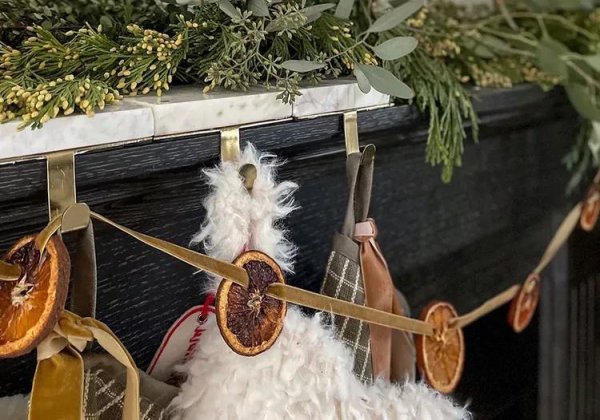
The result is a decoration that can be draped over a mantel, along shelves, or in a window. The dried slices retain a subtle sweetness, though most of the aroma is released during dehydration. For a stronger scent, a few drops of orange essential oil can be added.
Customization and Care
Variations are easy. For a red or pink hue, blood oranges or grapefruit work well; lemon slices can be mixed in for size contrast. Adding fresh cranberries and popcorn, a nod to Victorian decor, introduces extra color and texture, though those items will not store as long as the oranges. Alternatively, ribbon can replace string—make slits in the slices with a knife and thread the ribbon through, tying bows at the ends for flair.
Properly dehydrated and stored in an airtight container, dried orange slices can last two years or more. They darken over time, signaling when to discard them. The garland itself should hold up through the entire Christmas season. Extra slices can be saved to adorn wrapped gifts or hung on the tree as ornaments.
This DIY project offers a simple way to add a personal, sustainable touch to holiday decorating, with the added benefit of being kind to both the environment and your storage space.
Dried Orange Garland: A Simple DIY for Eco-Friendly Holiday Decor
Learn how to craft a dried orange garland, a compostable and reusable holiday decoration that fills your home with a subtle citrus scent. This guide covers materials, step-by-step baking instructions, and creative variations using cranberries, other citrus, or ribbon.
Leave a Comment
Comments (0)