Small Dining Room? Designers Share Six Space-Boosting Tricks
For homeowners grappling with a compact dining area, the challenge isn't just about style—it's about perception. Three interior designers, each with a distinct approach, offer six practical, low-cost strategies that can visually expand a small dining room without any structural work. Their advice ranges from furniture choices to paint techniques, all aimed at creating a sense of openness and flow.
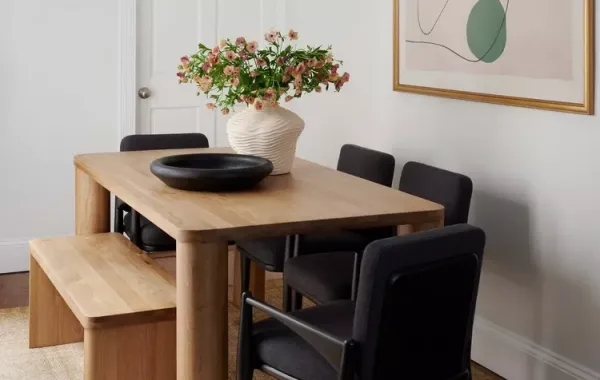
Mary Roberts, co-founder of Dunn & Hall Interiors, suggests rethinking the seating. “Gone are the days of ultra-formal dining rooms with ornate furniture,” she notes, advocating for chairs with open backs. This simple swap, she explains, keeps the visual plane less cluttered, allowing the eye to move freely around the room. Roberts also encourages using bright, fun hues—whether patterned or solid—to make the chairs a focal point, adding personality without overwhelming the space.
Another designer-approved tactic is the bench seat. Megan Baker, founder of Megan Baker Interiors, praises benches for their dual function: they turn an unused wall into a cozy nook while opening up the floor plan. “We love this detail for small dining rooms because it transforms a wall into a cozy seating area and opens up the flow around a small dining space,” she says. Whether you match a bench to your table or craft a custom one from scrap fabric, the effect is both practical and inviting.
Baker also champions the use of drapery. If windows exist, she recommends adding curtains to frame the space. “If there are windows, adding drapery is the perfect way to frame a small space and make it feel larger and more luxe,” she explains. The vertical lines draw the eye upward, enhancing the room's perceived height.
Ceiling Treatments and Color Techniques
Roberts takes the ceiling into account as a “fifth wall.” She suggests covering it with vibrant wallpaper, either matching the walls or as a standalone accent. For best results, she advises choosing a small-scale pattern so the ceiling enhances rather than dominates. This approach adds depth and interest without making the room feel closed in.
Michal Rubin, founder of MR Interiors, offers a different ceiling-centric strategy: color drenching. This involves painting all walls and trims—including doorways and baseboards—in a single, uniform color. “This gives the effect of a larger, continuous space,” Rubin says. By eliminating visual breaks, the room appears more expansive and cohesive.
Lighting, too, plays a pivotal role. Rubin recommends a Sputnik-style chandelier for small dining rooms. “Sputnik styles have arms that point in different directions, which can help guide the eye and keep it moving in a smaller dining room,” she notes. These fixtures are not only stylish but also widely available at affordable prices, making them a viable option for renters. Rubin advises keeping the original builder-grade light fixture to reinstall before moving out.
Baker adds a caution against undersizing the light fixture. “Too often I see small dining rooms with small light fixtures,” she says. “A large scale pendant or chandelier will make any small dining area feel like a full-size dining room.” The scale, she argues, is more important than the room's square footage.
These designer insights offer a roadmap for anyone looking to refresh a small dining space. Whether you opt for a bench, a bold ceiling, or a new chandelier, the key is to make intentional choices that promote openness and visual flow—proving that a little creativity can go a long way in transforming a compact area.
Small Dining Room? Designers Share Six Space-Boosting Tricks
Struggling with a cramped dining area? Three interior designers share six practical, budget-friendly strategies—from open-back chairs to color drenching—that can make the room feel more spacious without major renovations.
Leave a Comment
Comments (0)