Mastering Table Settings: From Everyday to Elegant
Setting a table goes beyond mere arrangement; it is a deliberate act that signals to guests that the meal is an occasion worth savoring. According to etiquette consultant Jo Hayes, founder of Etiquette Expert, a properly set table “establishes the meal as an event,” offering a pause from daily distractions to enjoy fellowship and conversation. This principle guides the three primary table-setting styles—basic, casual, and formal—each building on the previous to accommodate different levels of formality and occasion.
Hayes, who is noted as the world’s only etiquette consultant with academic research to her name, and Jamila Musayeva, an international etiquette coach and author of The Art of Entertaining, provided detailed instructions for each setting. Their guidance helps hosts create an atmosphere of care and intentionality, making guests feel valued and welcome.
Basic Setting: Simplicity and Functionality
The basic setting is the most minimal and is ideal for everyday meals, according to Musayeva. It focuses on simplicity and functionality, allowing for creative expression through cutlery choices, such as wooden-handled pieces. The layout begins with a tablecloth—Hayes recommends lace, cotton, or oilcloth, with linen reserved for more formal occasions—and optionally a placemat. A dinner plate is placed at each setting, with a fork on the left and a knife on the right; if soup is served, a soup spoon goes to the right of the knife. Paper napkins are acceptable, though Hayes prefers fabric, and they should be folded and placed under the fork. The water glass sits at the 2 o’clock position relative to the plate.
Casual Setting: A Polished Step Up
The casual setting adds a few elements for a more polished yet relaxed meal, as Musayeva describes. It includes a tablecloth and a placemat at each setting, with a dinner plate topped by a soup bowl and a salad plate. Flatware placement mirrors the basic setting, but a soup spoon is added to the right of the knife. Fabric napkins are recommended and placed under the fork. In addition to the water glass at 2 o’clock, a second glass—for wine or another beverage—is placed at 2 o’clock from the water glass.
Formal Setting: Elegance and Detail
For formal occasions, the setting reflects elegance and careful detail, says Musayeva. Hayes recommends a linen tablecloth, while Musayeva suggests a high-quality white cotton cloth with matching napkins. Placemats are skipped, and a charger plate is added, with a salad plate and soup bowl placed on top. Dinner plates are brought out with the main course. A bread plate with a horizontally placed bread knife sits at the 11 o’clock position to the left of the dinner plate. Flatware includes a fork on the left, a knife on the right, a soup spoon to the right of the knife, and a smaller salad fork to the left of the dinner fork. A dessert spoon is placed horizontally above the plate, and place cards go above that. Napkins are folded and placed under the fork, with fabric (ideally linen) being a must, and napkin rings are avoided. Glassware includes a water glass closest to the diner, a red wine glass at 2 o’clock from the water glass, and a white wine glass at about 7 o’clock from the red wine glass. Salt and pepper shakers are positioned to the left and right of the place card, respectively.
Practical Tips for Perfecting Your Table
Musayeva offers additional advice for napkins, glassware, and flatware. For basic and casual settings, napkins can be placed on top of the plate, to the left of the forks, or under the forks. In formal settings, a simple fold on the plate or to the side is preferred, and napkin rings are reserved for more casual upscale settings. Glassware should be placed above the knives on the right, starting with the water glass closest to the diner, followed by wine glasses in order of use. Flatware follows the order of courses: forks on the left, knives and spoons on the right, and dessert utensils above the plate for formal settings. For basic and casual tables, experimenting with colorful or modern cutlery is encouraged.
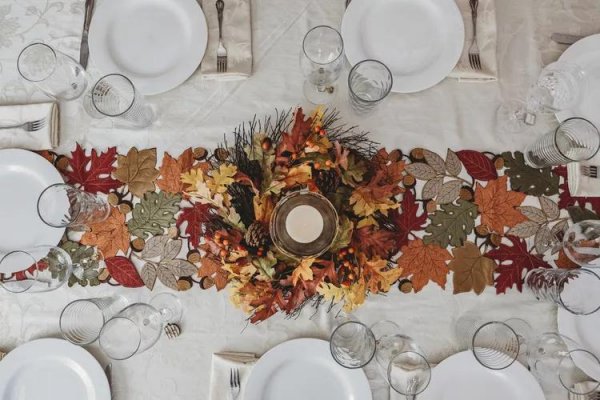
Centerpieces and extras play a more significant role in formal settings. Musayeva advises positioning flower arrangements either above or below eye level to avoid obstructing conversation, and lighting candles after sunset to enhance the ambiance. When choosing a centerpiece, consider the theme of the meal and the space needed for serving dishes, ensuring it complements the colors and textures of the dinnerware and linens.
Ultimately, mastering these three table-setting styles provides a solid foundation for any gathering. Whether hosting a casual family dinner or a formal celebration, the effort put into the table demonstrates care and intentionality, making guests feel truly special.
Mastering Table Settings: From Everyday to Elegant
Learn the essential rules of table setting from etiquette experts, from minimal everyday layouts to elaborate formal arrangements. This guide breaks down each style, explains the reasoning behind the placement, and offers practical tips for napkins, glassware, and centerpieces.
Leave a Comment
Comments (0)