15 Space-Saving Ideas for Small Nurseries, From Mini Cribs to Closet Door Storage
Fitting a nursery into a room roughly the size of a suburban closet takes more than paint and a crib. A design roundup published by a home publication collects 15 space-saving strategies for compact nurseries, with contributions from designers including Cathie Hong, Chelius House of Design, Crystal Sinclair Design, Burchard Design Co., Calimia Home, Stephanie Hoey Interiors, and others.

The first recommendation is to downsize the crib. Mini cribs, the roundup notes, look and function like standard cribs but have scaled-down frames suited to small rooms. Many models cost less than $400, which the source says may also ease budget pressure.
For diapering, the roundup suggests skipping a traditional changing table in favor of a crib-top changing station. These portable trays sit vertically across the crib, secured with straps and rail-hugging grooves, and disappear under the crib when not in use.

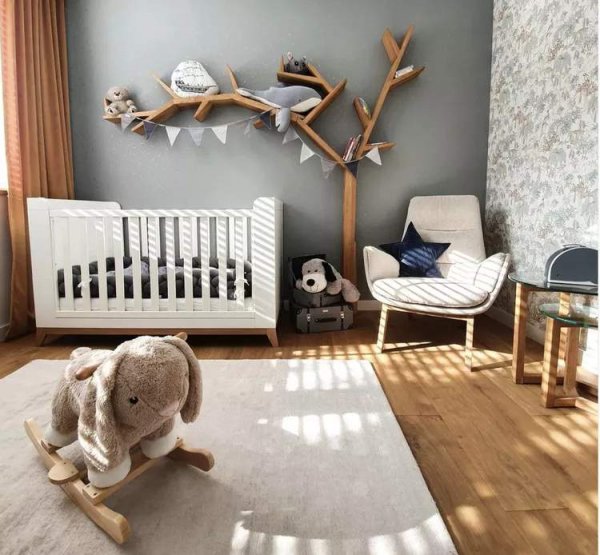
Unused pockets of space, such as the area under a crib, can be converted into shelving or storage, the article advises. It also recommends creative shelving, including a tree-shaped shelf used in a gray nursery for stuffed animals and small items.


Floating shelves are described as a must-have because they add storage without using floor space. Some can serve multiple purposes; one example includes a hanging rod for baby outfits. Wall hooks with large canvas bags offer another way to use vertical space for toys, plush animals, and socks.


Book ledges can hold dozens of books in as little as three inches behind a door, taking up far less room than a traditional bookshelf. The roundup notes they are inexpensive and fairly easy to install, and can be homemade.

In the closet, adding a second rail can double capacity, with staggered rails leaving room for storage below. Removing closet doors entirely can free up space for furniture placement and make a small room appear larger, while mounting shelves or a pegboard inside a door that stays can add accessible storage.


Multi-purpose furniture, such as a crib with two drawers underneath, keeps necessities within reach without extra footprint. A white color scheme is recommended for its ability to open up a space and create a calm atmosphere. Floor-to-ceiling shelving draws the eye upward, with frequently used items on lower shelves and decorative pieces higher up; the article suggests decluttering before loading the shelves.


Wall-mounted sconces are offered as an alternative to floor lamps, freeing floor space while providing soft light for nighttime feedings or rocking a baby to sleep. Finally, the roundup advises letting in natural light and choosing blinds that fully cover windows for privacy but can be lifted easily.

15 Space-Saving Ideas for Small Nurseries, From Mini Cribs to Closet Door Storage
A design roundup offers 15 practical strategies for furnishing a compact nursery, including mini cribs under $400, crib-top changing stations, floating shelves, and repurposed closet doors. The tips focus on vertical storage, multi-purpose furniture, and light color schemes to make limited square footage work harder.
Editorial Notes