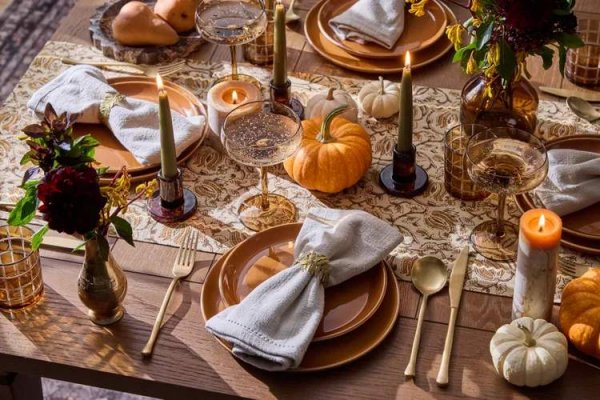
Designers Reveal What Thanksgiving Guests Notice Most at Your Table
Thanksgiving hosts spend hours on the menu, but interior designers say the table itself sends a message before the first dish is passed. Two designers, John McClain of John McClain Design and Marie Flanigan of Marie Flanigan Interiors, told The Spruce what dinner guests tend to notice first — and where hosts can focus their effort.

McClain, CEO and creative director of his firm, describes the tablecloth as the foundation of the whole setting. "When you're hosting for the first time, your table's foundation sets the tone for everything else," he said. "I always say the tablecloth is the stage—and when that stage looks pulled together, everything on top shines a little brighter."
Details guests pick up on include how smoothly the fabric lies, how its edges fall, and whether napkins are neatly folded or casually draped. A too-short cloth or mismatched napkins, McClain said, "can make the table feel a bit unfinished." His practical fix: buy linens on sale, store them together within one preferred color palette so pieces can be mixed and matched, and add a napkin ring for polish without much effort.
Restraint Beats Seasonal Themes

Flanigan cautioned against leaning too heavily on obvious holiday colors. "It's easy to get carried away with seasonal decor, but restraint often leaves the most lasting impression," she said. "Overly themed seasonal color can make a table feel contrived rather than collected." She recommends a softer, more organic palette — muted earth tones, aged brass, or the natural hues of foraged greenery — so the meal and conversation stay central.

Centerpieces, Flanigan said, should enhance rather than block the table. "Centerpieces that block the view across the table can disrupt the very essence of Thanksgiving: connection," she said. Low, layered arrangements, scattered votives, or natural branches add texture without becoming a barrier.

McClain agreed that florals need limits. "Florals bring life and movement to a Thanksgiving table," he said, "but the secret is knowing when to stop." Oversized, mismatched, or busy arrangements can overwhelm guests, while a too-tall bouquet blocks sightlines and one that is too small can feel like an afterthought. For first-time hosts, he suggested mixing flowers in the same color family with varying textures and shapes — "simple, elegant, and always chic."
Leave Room for the Meal

Overcrowding the table with decor or dinnerware can make guests feel confined, Flanigan warned. "Leave room for serving pieces, family-style dishes, and the inevitable passing of plates," she said. "A thoughtfully edited table allows your guests to feel comfortable and keeps the focus where it belongs: on gathering, gratitude, and the shared beauty of the moment."

Both designers' guidance points in the same direction: personal, handmade touches — a DIY centerpiece or hand-written place cards — tend to read as warm and meaningful rather than generic and store-bought. For hosts, the takeaway is that a cohesive foundation and a few intentional details do more than a fully themed table.
Designers Reveal What Thanksgiving Guests Notice Most at Your Table
Interior designers John McClain and Marie Flanigan told The Spruce what Thanksgiving dinner guests notice most: table linens, restrained seasonal decor, well-scaled centerpieces, fresh floral arrangements, uncluttered settings, and personal handmade touches. Their advice focuses on cohesion and comfort over elaborate themes.
Editorial Notes